Tutorials
Claude Opus 5.5: audit product emails clipped by Gmail
Use Claude Opus 5.5 to compare the authored email HTML with the delivered message before deleting product content.
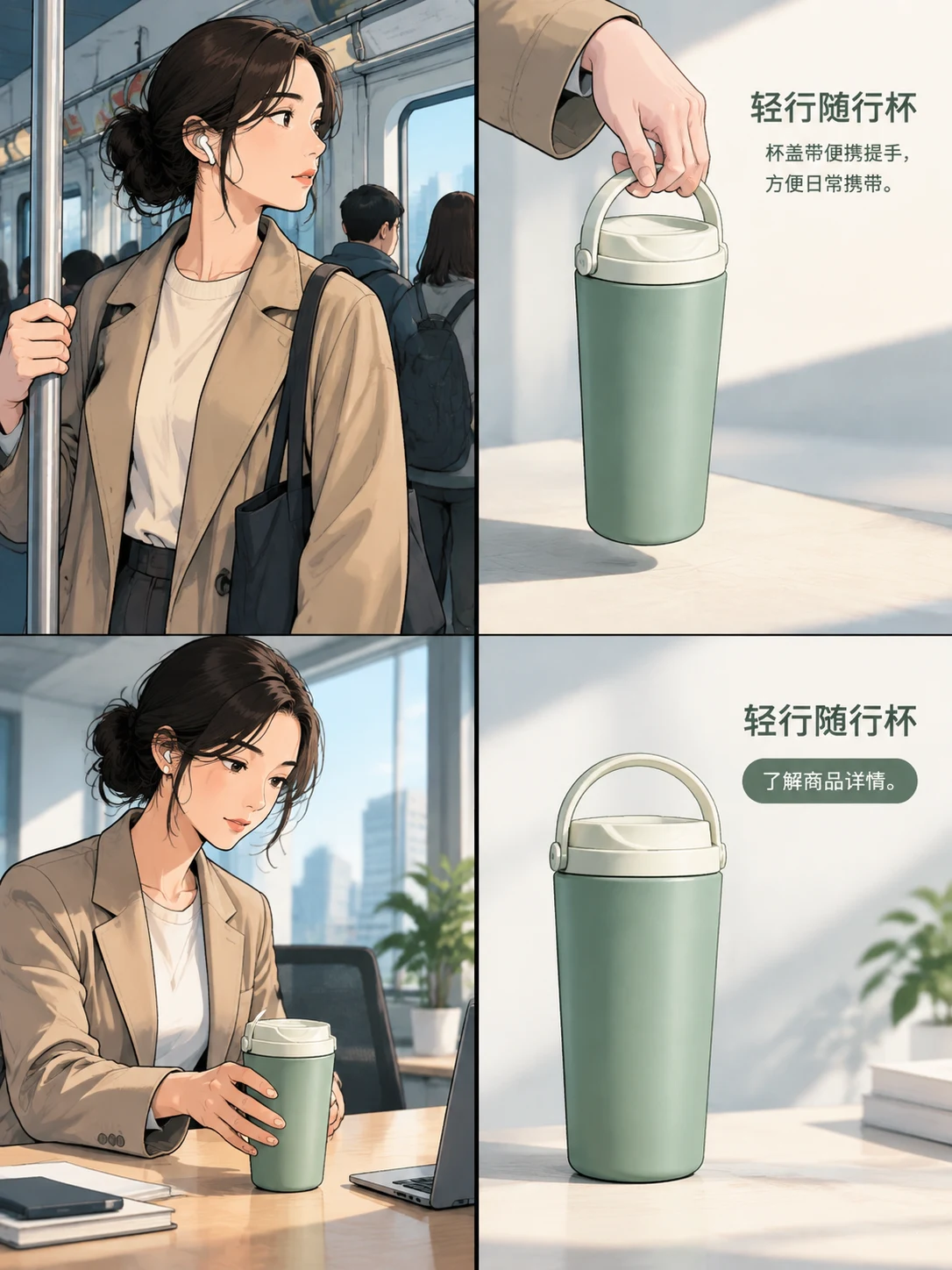
Make it with Panelly
Turn inspiration into your next product ad
Bring a product image and an idea. Create a four-panel ad, a coordinated asset set, or a video with Panelly.
Create with Panelly Edit the brief before you generate.
Use Claude Opus 5.5 to compare the authored email HTML with the delivered message before deleting product content. A small image file does not prove a small message: repeated markup and rewritten tracking URLs can enlarge the HTML. Find which stage adds bytes, then remove dispensable markup while preserving the offer, destination links and unsubscribe controls.
Measure the right artifact
| Artifact | What it answers | What it cannot prove |
|---|---|---|
| Local HTML file | Size before sending transformations | Final delivered size |
| HTML after personalization and link rewriting | Growth from the sending pipeline | How every Gmail client displays it |
| Received message and visible footer | What reached the test inbox | Delivery to every recipient |
Mailchimp documents Gmail clipping around 102 KB. Treat that as a documented practical boundary, not permission to target its last byte. Its guidance also distinguishes message code from externally loaded image weight. Record bytes explicitly, because character counts and labels such as KB can obscure what was measured.
A byte budget with room for transformations
Consider a fictional product newsletter with 86,000 bytes of HTML before link rewriting. If 100 links each grow by 180 bytes, the delivered HTML estimate is 104,000 bytes. Removing 14,000 bytes of unused blocks would bring that estimate to 90,000 bytes. These additions and subtractions were calculated locally; they are not a real sent campaign or a universal safe limit.
Measure the actual final HTML after your email platform's transformations. UTF-8 byte length can exceed the visible character count, especially for translated text. An exported email or MIME message can include transport encoding and headers, so record which part you measured rather than comparing unlike file sizes. Use a fresh subject for a fresh test thread, and inspect the received source as well as the visible result.
Give Opus the two versions
Audit these two product email HTML files: authored version A and delivered HTML part B. Count UTF-8 bytes with a tool if available; otherwise return commands without inventing measurements. Locate repeated blocks, unnecessary comments, redundant styling and rewritten URLs. Use this fictional budget only as an example: 86,000 initial bytes plus 100 links growing by 180 bytes equals 104,000; removing 14,000 leaves 90,000. Keep the offer, essential product details, accessible image descriptions, functional destinations, unsubscribe and required footer information. Propose changes ranked by observed byte savings and rendering risk. Return a before/after inventory and a fresh-subject Gmail test plan. Do not claim that reducing external image dimensions guarantees the HTML will avoid clipping, or that you sent an email unless you actually did.The official Opus guide informs the bounded request. No model or email-delivery test was performed here. A 2016 community question describes conflicting size observations; it motivates measuring consistent artifacts, not treating a forum report as a current Gmail guarantee.
Reduce bytes without deleting the decision
Start with duplicated or unused blocks. Recheck rendering before removing email-specific compatibility code: markup that looks redundant can support a particular client. Keep the price, product distinction and action needed to make a purchase decision. If necessary, move optional detail to a linked product page while keeping a useful self-contained email. Do not remove essential footer controls to fit a budget.
Inspect the final CTA and footer in desktop and mobile Gmail, plus the other clients your audience uses. Check all destinations after rewriting and verify translated variants separately. Clipping is separate from the preheader problem. Create campaign visuals in Panelly Studio, then place them in your email system; this article does not claim Panelly sends email or integrates Opus.
Practical questions
Will compressing the hero image solve clipping?
It can help image loading, but a remote image's file weight is not the same as the email's HTML weight. Measure the message first.
Is 90,000 bytes a guarantee?
No. It is this example's planning figure. Personalization, rewriting and client behavior still require a delivered test.
Can I minify every style and comment?
Keep a readable source copy and test a reversible candidate. Preserve compatibility constructs until you have verified that their removal is safe for your target clients.