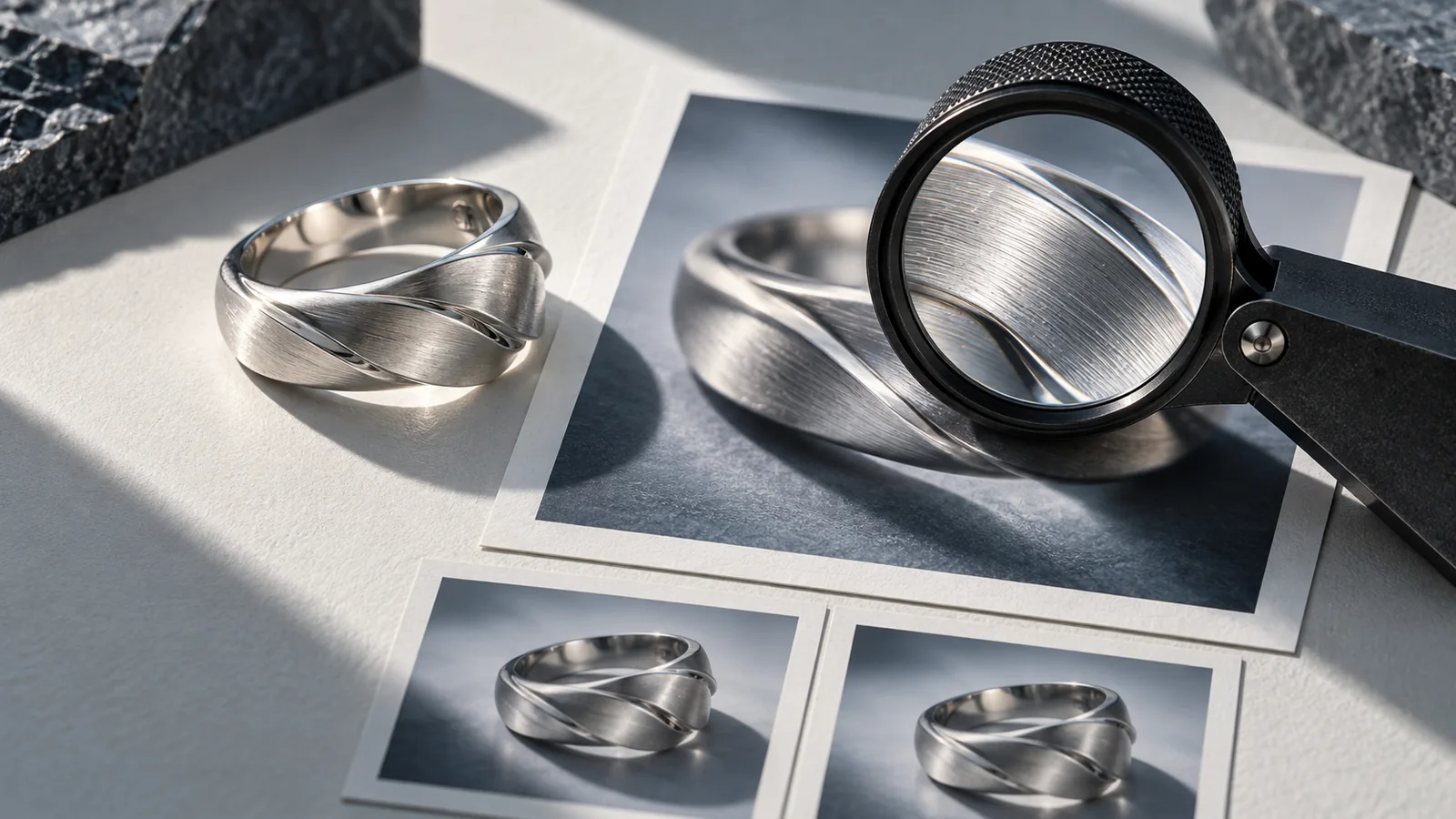
Tutorials
Product Label Glare: Keep the Shine and Make the Packaging Readable
Diagnose label glare, viewing angle and missing source detail, then keep the packaging readable without erasing its glossy finish.
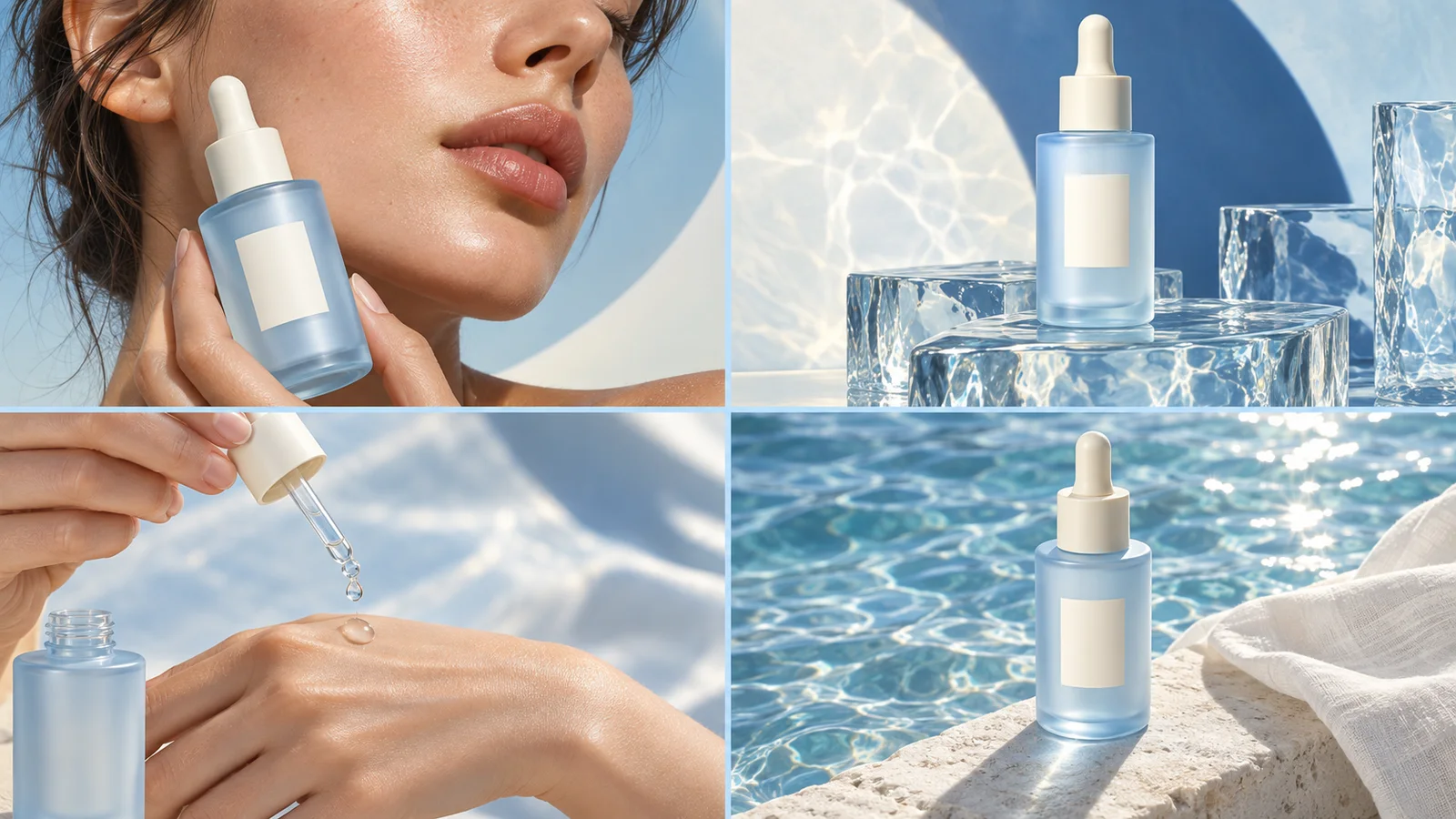
Move or reshape the reflection that covers the label while keeping enough highlight to describe the material. Removing every reflection can make glossy packaging look matte; brightening the whole frame can make a washed-out label even harder to read. First decide whether the problem is glare, a poor viewing angle or missing detail in the source image.
This guide concerns the label physically printed on the package. A campaign headline placed elsewhere in the ad is a separate composition question, covered in mobile ad readability.
Diagnose before editing
| What you see | Likely task | First useful action |
|---|---|---|
| A white patch covers letters | Reflection control | Move the highlight away from the label |
| The label wraps out of sight | Product orientation | Show a more frontal view |
| The entire label is blurry | Better source information | Supply a sharp photograph |
| The label is dark but not reflective | Local illumination | Ask for restrained light on the front |
| The bottle looks like flat plastic | Material restoration | Restore a controlled edge highlight |
Broncolor's glossy-bottle example treats the bottle and mixed-finish label as distinct lighting problems. Our editing requests below use that distinction without claiming a generated image behaves like a physical studio setup.
Start with the label area, not the whole image
Imagine a fictional amber bottle with a cream label. A broad bright stripe crosses the product name. Keep the narrow reflection on the bottle's right edge, but ask for the label surface to be evenly visible. Avoid asking for “zero glare anywhere,” which may erase the bottle's glossy character.
Revise @image1. Keep the amber bottle, cream label, exact label wording and scene. Move the bright stripe off the label. Retain a narrow soft highlight along the right glass edge so the bottle still looks glossy. Keep the label evenly lit and frontal. Preserve the ad headline and CTA.This is a fictional editorial example, not a measured repair. If the actual label text is absent from the reference, provide a clearer product photograph. A plausible reconstruction is not evidence that the real label says the same thing.
Separate three kinds of text problems
Glare, angle and copy are different tasks. If the label is hidden around the side of a cylindrical package, lighting alone cannot make the whole front face visible. Request a small rotation toward the camera and check that the neck and cap still match the product.
If the label is visible but the wording is wrong, specify the exact words and provide the product reference. There is no need to remove the headline or CTA from the generated ad. Preserve them while correcting the package, then inspect both kinds of text in the new result.
If the source is clipped to pure white across the label, reducing brightness cannot recover the missing letters. A new source angle or a separate sharp label photo is a better input than increasingly elaborate prompts.
Photograph a better reference when needed
For a real reshoot, change the relationship between light, camera and reflective surface. Move the light or product slightly and observe where the bright patch goes. A larger diffuser can change the shape of the reflection; it does not guarantee that the label becomes clear in every position.
Take one frame where the product's form reads well and another where the label is clear if necessary. When uploading both, explain that they show the same product and which detail each should supply. See reference image roles.
In Panelly Studio, reference the image to revise and describe the exact patch. After generation, check the cap, label boundary, product color and material. A successful local-looking change can still introduce differences elsewhere.
FAQ
Should a premium bottle have no reflections?
No. Controlled reflections can explain its shape and finish. The goal is to keep important information visible while retaining the real material.
Will higher resolution fix an unreadable label?
Not if the needed information is hidden or absent. Improve the source or viewing angle first, then choose an appropriate output size.
Should I rebuild the label in a separate text editor?
That is not required for this workflow. Request the correction in the complete image and review the result. Exact packaging documentation may still call for a real photograph.
Choose the one reflection that causes the problem and ask for a change to that area before redesigning the ad.